
Thailand ATM fees are the quietest tax on a Thailand budget travel trip. Nobody prices them in, everybody pays them, and in 2026 they have gone up. The machine charges you before your own bank has even started. Get this one thing right and you claw back the equivalent of two or three days of cheap food in Bangkok, without changing a single thing about your holiday.
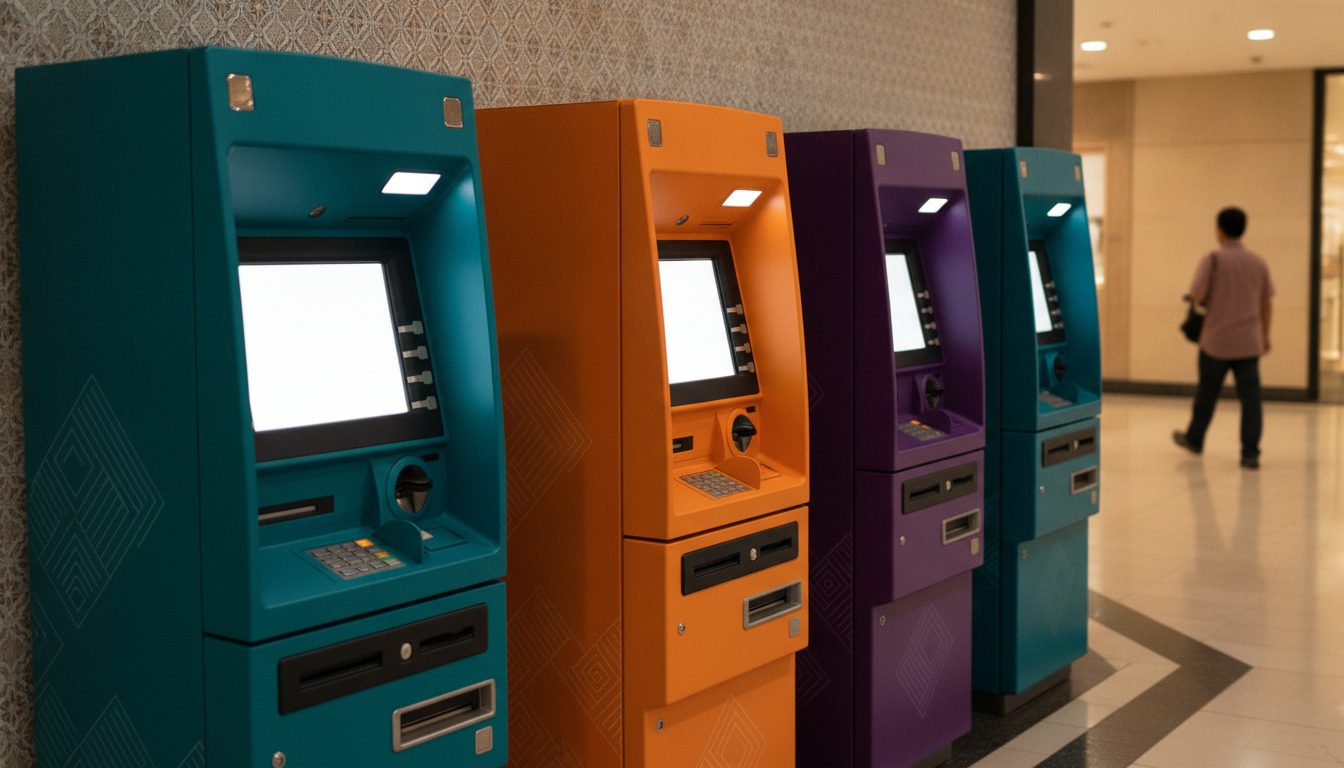
Thailand ATM fees in 2026: what the machines actually charge
The fee is levied by the Thai machine, not by your bank, and it is a flat charge per withdrawal — the same whether you take out 1,000 baht or 20,000 baht. For years the standard was 220 baht. Through 2025 and into 2026 the mainstream banks moved up.
| Where you withdraw | Foreign-card fee per withdrawal | Usual max per withdrawal |
|---|---|---|
| Bangkok Bank, Kasikorn, SCB, Krungthai | 250 baht (Visa); up to 350 baht reported on some Mastercard withdrawals | 20,000–30,000 baht |
| Krungsri (Bank of Ayudhya) | 250 baht | 20,000–25,000 baht |
| AEON | 150 baht historically — but the network largely closed in 2024 | 20,000 baht |
| Standalone machines in bars, malls, 7-Eleven forecourts | 250 baht and up, and the pushiest conversion prompts | Often 10,000–20,000 baht |
On top of that sits your own bank's foreign-transaction markup, typically 1–3%. So a "250 baht" withdrawal of 16,000 baht really costs 250 baht plus roughly 160–480 baht of invisible margin.
Always decline dynamic currency conversion
When a Thai ATM or card terminal offers to bill you "in your home currency" with a helpfully displayed rate, that is dynamic currency conversion, and the rate is set by the machine's operator rather than by Visa or Mastercard. The markup usually lands somewhere between 3% and 7%.
The rule is short: always choose Thai baht. Always press "continue without conversion", or "decline conversion", however it is worded. On a 16,000-baht withdrawal, that one button is worth around 500–1,100 baht. The same applies to card machines in restaurants and hotels.
What 16,000 baht really costs you, six ways
Mid-market on 4 August 2026 was roughly 33.40 baht to the US dollar. At that rate, 16,000 baht is worth $479. Here is what each route actually charges you for the same stack of notes.
| Method | You hand over | Cost vs mid-market |
|---|---|---|
| Fee-refunding debit card (e.g. Schwab-style), one withdrawal, no DCC | $479 | 0 baht |
| SuperRich Thailand, cash US dollars, B-floor branch | $484 | ≈ 160 baht |
| Standard debit card, one 16,000-baht withdrawal, 250-baht fee + 2% markup | $496 | ≈ 583 baht |
| Same card, split into two withdrawals | $504 | ≈ 838 baht |
| Airport arrivals-hall bank counter, cash US dollars | $498 | ≈ 648 baht |
| ATM withdrawal where you accepted DCC | $518 | ≈ 1,290 baht |
The spread between best and worst on a single transaction is about 1,290 baht — roughly twenty plates of pad kraphao, or two nights in a decent Chiang Mai guesthouse. Repeat the mistake five times across a fortnight and you are down the price of a domestic flight.
Money exchange Thailand: cash still wins, if you walk
Thailand is one of the few countries where carrying physical cash and changing it beats withdrawing at an ATM, because there is no flat fee and the independent booths are genuinely competitive.
- Arrivals-hall bank counters at Suvarnabhumi and Don Mueang sit 2–6% below mid-market. Convenient, and priced accordingly.
- SuperRich and its competitors typically run about 1% below mid-market. At Suvarnabhumi they are on B floor, two levels below arrivals, next to the Airport Rail Link station, open roughly 05:30–23:30.
- City branches (Phaya Thai, Ratchadamri, Silom) shade the airport rates by another 0.30–0.50 baht per dollar. Worth it if you are exchanging serious money; not worth a special trip.
- Hotel front desks are the worst rate you will be offered anywhere in Thailand. Treat them as an emergency only.
Suvarnabhumi airport transit and the two-floor trick
The Suvarnabhumi airport transit route doubles as the money route. Take the lift down to B floor, change enough cash for the first few days at a SuperRich Thailand booth, then step onto the Airport Rail Link for 45 baht to Phaya Thai — where the city-centre exchange offices are clustered anyway. Compare that with 350–500 baht for a taxi you queued for upstairs, at a worse rate you accepted upstairs. Our Airport Rail Link cost breakdown has the full timings and the honest case for taking a taxi instead if there are four of you with luggage.
Which card to bring
Three categories of card, three very different bills
The right plastic neutralises most of what Thailand ATM fees cost you, and the difference between the three types is real money:
- ATM-fee-refunding accounts (Charles Schwab Investor Checking is the best-known) reimburse the 250-baht Thai charge. On a two-week trip with three withdrawals that is 750 baht straight back.
- Wise and Revolut convert at or near mid-market with a small transparent fee, which kills your bank's 1–3% markup — but they do not refund the Thai machine's 250 baht. Still a clear win over a high-street debit card.
- A standard high-street debit card is the expensive option: their fee, plus a markup, plus a poor rate.
Bring two cards from different networks. Thai ATMs decline foreign cards often enough that a single card is a genuine risk, and the fix at 11pm in Krabi is expensive.
How much cash do you actually need?
Withdrawing the maximum only helps if you will spend it. Typical budget-traveller day rates, all in baht: street food 50–70 a plate, a 7-Eleven meal about 60, a shop beer 45–60 against 90–150 in a bar, BTS trips 17–47, a hostel bed 350–600, a decent budget hotel room 800–1,400. That puts the average cost per day in Thailand somewhere around 1,200–1,800 baht for a comfortable budget trip outside the islands.
So one 20,000-baht withdrawal covers roughly 11–16 days. That is the whole game: one withdrawal, one fee, one trip. Plug your own numbers into the Thailand holiday budget estimator and it will tell you how much cash you actually need to pull out on day one.
Bottom line: your Thailand ATM fees savings summary
- Decline dynamic currency conversion, every time. Saves 500–1,100 baht per transaction.
- Withdraw the maximum, as rarely as possible. Saves 250 baht every time you resist a top-up.
- Walk two floors down at Suvarnabhumi before changing money. Saves 3–4% on the amount exchanged.
- Bring cash to exchange if you are comfortable carrying it — no flat fee at all.
- Carry a fee-refunding or mid-market card as your primary, and a second card as backup.
Do all five on a two-week trip and you keep somewhere between 2,000 and 4,000 baht that would otherwise have vanished into fee lines you never see. That is a night in a nicer hotel, a domestic flight, or a very large number of beers — bought with money you already had.
Thailand ATM fees: quick answers
How much is the ATM fee in Thailand in 2026?
250 baht per withdrawal at most Thai banks for foreign cards, with 350 baht reported on some Mastercard withdrawals. It is charged per transaction, not per baht.
Can I avoid the Thai ATM fee entirely?
Only two ways: use a card that reimburses foreign ATM fees, or bring cash and exchange it at a booth like SuperRich instead of withdrawing.
Is it cheaper to exchange cash or use an ATM in Thailand?
Exchanging cash at a competitive booth is usually cheaper, because there is no flat fee — typically about 1% below mid-market versus roughly 3–4% all-in for a single ATM withdrawal.
Work out what this costs you
Rules and fees change; your budget should keep up. The estimator does the sums in about two minutes.
Build my Thailand budget →Sources
Reporting this piece draws on. Rules change — check the primary source before you act on anything here.
- Thailand ATM Calculator - Thailand ATM fees 2026: 250-350 THB flat fee
- YouTrip - Thailand ATM withdrawal guide: fees, locations, exchange rates 2026
- Thailand Starter Kit - The complete guide to ATMs in Thailand
- Thaiest - Best currency exchange rates at Suvarnabhumi Airport
- SuperRich 1965 - live exchange rates
- Exchange-Rates.org - USD/THB exchange rate history 2026
Published 4 August 2026. Travel rules, fees and prices change without much warning — always confirm with an official source or your embassy before you book or travel. Nothing here is legal, immigration or financial advice.