
The proof-of-funds requirement is not new. What is new in 2026 is that it is being treated as a central entry condition rather than a dusty formality, and spot checks have become noticeably more common at the busier airports.
The numbers
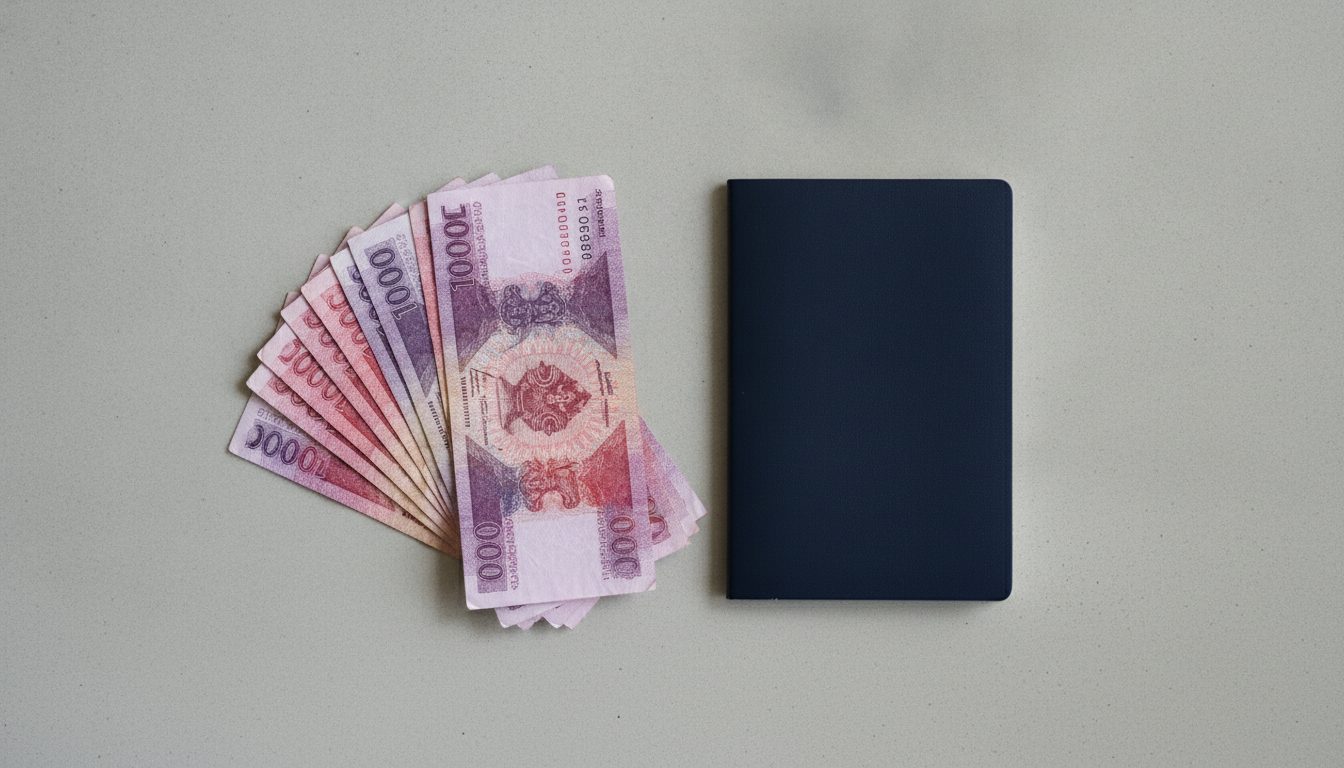
Travellers arriving visa-exempt may be asked to demonstrate funds of 20,000 baht per person, or 40,000 baht per family travelling together. At current rates that's roughly £450 / $560 per person.
How to satisfy it sensibly
You do not need to hand over a wad of banknotes. Officers generally accept a combination of:
- A recent bank statement or banking-app screenshot showing the balance — have it saved offline, not dependent on airport wifi.
- A credit card with visible headroom.
- Some cash — a few hundred pounds/dollars' worth is plenty as a supporting show.
Carrying 20,000 baht in cash purely to satisfy a check you'll probably never face is the wrong trade — you're then walking through an airport with a large amount of cash for no reason.
The rest of the checklist
While you're getting the paperwork straight, the other standing requirements are:
- Passport valid for at least six months from your date of entry.
- A confirmed onward or return ticket. This one is enforced by airlines at check-in far more often than by Thai immigration on arrival — a one-way ticket can get you refused boarding before you ever leave home.
- Proof of accommodation, at least for the first nights.
- Your TDAC QR code.
Work out what this costs you
Rules and fees change; your budget should keep up. The estimator does the sums in about two minutes.
Build my Thailand budget →Sources
Reporting this piece draws on. Rules change — check the primary source before you act on anything here.
Published 7 July 2026. Travel rules, fees and prices change without much warning — always confirm with an official source or your embassy before you book or travel. Nothing here is legal, immigration or financial advice.